foto perfil Julián D. Cortés

Julián D. Cortés

Bogotá, Colombia
Conferencista | Capacitador | Docente | Moderador | Panelista
¡Evalúame!

Me especializo en medir el conocimiento. Desde 2012, he trabajado como investigador, docente, y administrativo en diversas universidades colombianas como U. Rosario y U. Andes, además de entidades públicas como el Ministerio de Ciencia, Tecnología e Innovación. Las Universidades de California, Berkeley (EEUU) y Fudan (China) me brindaron un lugar como conferencista e investigador invitado, respectivamente. Algunas de mis ideas han sido publicadas en revistas como Scientometrics, Journal of Information Science, y PLoS ONE, además de algunos libros de editoriales nacionales e internacionales. Me motiva pensar que lo que hago apunta al desarroll... Ver más

0.0

Julián D. Cortés

Bogotá, Colombia

Conferencista | Capacitador | Docente | Moderador | Panelista


Me especializo en medir el conocimiento. Desde 2012, he trabajado como investigador, docente, y administrativo en diversas universidades colombianas como U. Rosario y U. Andes, además de entidades públicas como el Ministerio de Ciencia, Tecnología e Innovación. Las Universidades de California, Berkeley (EEUU) y Fudan (China) me brindaron un lugar como conferencista e investigador invitado, respectivamente. Algunas de mis ideas han sido publicadas en revistas como Scientometrics, Journal of Information Science, y PLoS ONE, además de algunos libros de editoriales nacionales e internacionales. Me motiva pensar que lo que hago apunta al desarroll... Ver más

País de residencia: Colombia

Nacionalidad: Colombia

Idiomas: Español, Inglés

Áreas de conocimiento

imagen portada Midiendo la ciencia - Introducción

Midiendo la ciencia - Introducción

De 1 Hora a 2 Horas

En este espacio, abordaremos los aspectos introductorios sobre la cienciometría. Resolveremos la si...
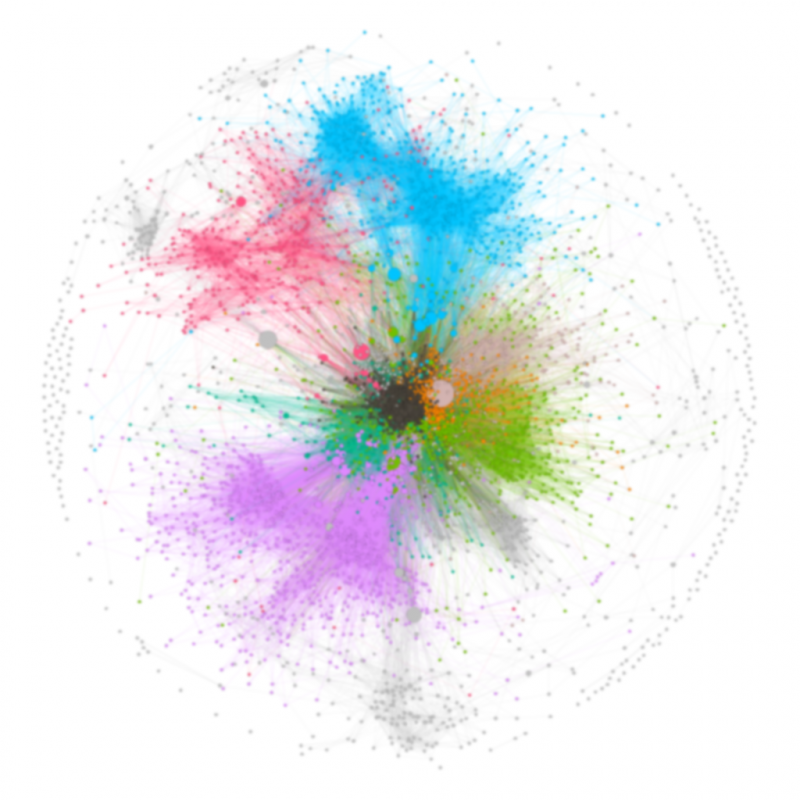
imagen portada Midiendo la ciencia - Fuentes de datos

Midiendo la ciencia - Fuentes de datos

De 1 Hora a 2 Horas

En este espacio, conoceremos las fuentes de datos bibliográficas para la investigación en cienciom...

Bibliometric evidence on Innovation for Sustainability in the Global South

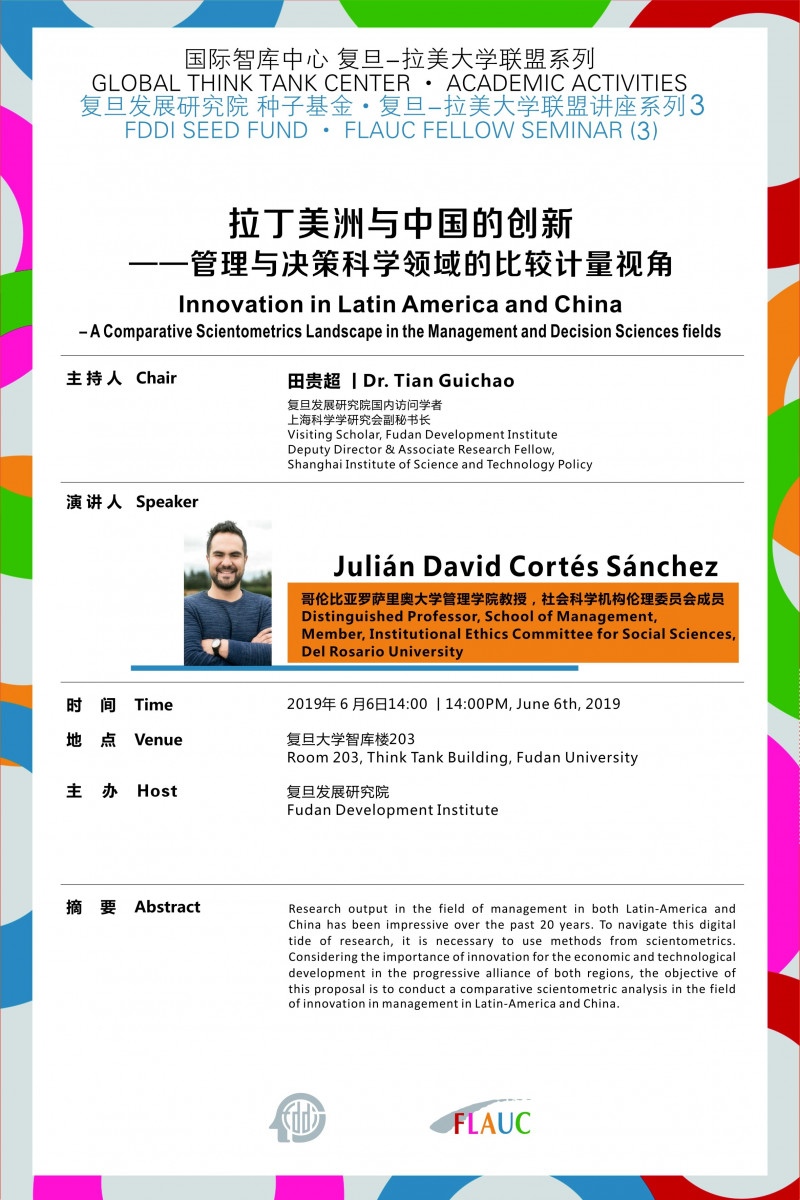
Investigación sobre innovación en China y América Latina

Investigación en Innovación China-América Latina

Converging or diverging? Structure transition of sustainability research

Mission statements of research-oriented organizations

Dissension or consensus? Management-Business Research in Latin America

La anaconda y el dragón - Colaboración institucional América Latina - China

Scientific elites in developing countries - Colombia
  • U

    Profesor de tiempo completo (distinguido)

    • Universidad del Rosario
    • 2014 - Actual
  • U

    Investigador asociado

    • Universidad de Fudan, China
    • 2019 - Actual
  • U

    Investigador visitante

    • Universidad de Fudan, China
    • 2019 - 2019
  • U

    Asistente de docencia

    • Universidad de los Andes
    • 2012 - 2013
  • M

    Investigador junior

    • Ministerio de Ciencia, Tecnología, e Innovación, Colombia
    • 2011 - 2013
  • U

    Maestría en estudios interdisciplinarios sobre desarrollo

    • Universidad de los Andes
    • 2015
  • U

    Administración de negocios internacionales

    • Universidad del Rosario
    • 2011
libro

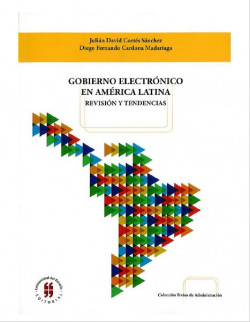
Gobierno Electrónico en América Latina

Esta investigación, tiene el objetivo de elaborar un marco teórico sobre el diseño, despliegue, evaluación, y futuro del GE (Gobierno Electrónico) en Latinoamérica. Para alcanzar este objetivo general, es vital avanzar en tres frentes interrelacionados. El primero, es presentar la evolución del marco internacional de acuerdos de cooperación relacionados con GE en Latinoamérica. El segundo, es evaluar el desempeño que ha tenido una muestra de países de Latinoamérica en el despliegue de estrategias relacionadas con GE y transparencia. Finalmente, se considera esencial identificar las tendencias del GE, en un plano más general.


libro

Capítulo - Patents for All: A Content Analysis of an Open-access Dataset of Colombian Patents 1930–2000

The production of knowledge stock is essential for the long-term growth of a nation. One component of knowledge stock is patents. The publication of patents, nevertheless, is unevenly distributed around the world. To better understand these inequalities in the context of a developing country such as Colombia, it is crucial to integrate historical insights into institutions and economic outputs. Despite this need, peer-reviewed literature on the history of patents in Colombia is scarce. In this context, we look at a barely known or cited work entitled Inventos y patentes en Colombia 1930–2000, published by Alberto Mayor in 2005. He recorded more than 1500 patents granted between 1930 and 2000. Using this historical dataset, we discuss the historical pathway regarding the publication of patents and inventions in Colombia between 1930 and 2000 by identifying critical factors such as patent registration by year, coefficient of invention, type of inventor (male, female, group of inventors, or a company), geographical location, classification, and a content analysis of the text corpus of the patent titles.


Mission statements of universities worldwide - Text mining and visualization

Abrir enlace

Purpose: To conduct a transnational study of universities' mission statements (MS) through content analysis by identifying characteristics related to language (e.g., number of words, the most and least frequently used words) and if those characteristics are related to universities' location, size, focus, research output, age band, and status. Design/methodology: Content analysis of 248 MS from universities worldwide using Voyant Tools. Findings: The main results show: (1) a necessity for self-awareness by the universities; (2) an overall emphasis on society and students, as stakeholders; (3) there were no discernible similarities in keywords used between firms and universities; (4) MS tend to be longer in universities from Asia and shorter from Europe; (5) the absence of quantitative elementsinto MS (e.g. number of new students enrolled); (6) small universities prioritized knowledge over research; (7) the youngest universities tend to use more of the least frequently used words; (8) collaboration was a barely mentioned term, although the pre-eminence of research and the dominance of groups in knowledge is now a global trend; (9) the youngest universities tend to use more of the least frequently used words; (10) public universities emphasized individuals (i.e., students) and private universities emphasized education as a whole; and (11) the private sector has a noticeable interest in the society which contrasts with the public sector's focus on community. Research limitations/implications: Subsamples of certain regions should be more inclusive in further studies. Considering that the mean sample of MS studies was 89.6, this study used a sample more than two times larger. Although, both African (4) and Latin American (5) subsamples were not significant compared with European (94) or North American (79) subsamples. Further studies should consider a more-inclusive sampling than the QS world university ranking. Practical implications: University planning offices can use these results and the digital database to construct a global outlook on MS trends or uncommonly used words to define the purpose of their university and future course of action, embrace an overall isomorphism, or seek a distinctive strategy to differentiate their MS from others. In addition, this research can be used by strategic planning scholars to conduct regionally or nationally focused studies. Social implications: Universities' MS serve as public pronouncements of their purpose, ambition, and values. In this study, we present and analyze the contents of those purposes, in which mission-oriented universities, some of them global influencers, seek to perform in multiple levels of importance for every country (i.e., education, research, and services with both private and public sectors, and the community).Originality/value: Most of the previous studies have been restricted to national contexts and based on reduced samples with no open access digital data. In this study, we consider a wide sample of universities from Europe, North America, Asia, and Oceania. We also considered both Latin America and Africa in a strictly exploratory fashion due to sample restriction and delivered a digital open access database of MS from those universities.


Innovation in Latin America through the lens of bibliometrics: crammed and fading away

Abrir enlace

Research in the field of innovation in business, management, and accounting (BMA) in Latin America (LATAM) has surpassed all expectations of its net output. Yet this digital tide suggests several concerns regarding its impact and both its established and emergent research topics at the individual, institutional, and country level. In this paper, an outlook of the field was developed based on a sample of + 1300 documents indexed in Scopus from 1983 to 2018. Public institutions in Brazil and Colombia have been both the most cited and productive in the region. Nevertheless, documents lead by non-LATAM authors showed significant differences in both paper citations and journals’ h-index compared to leading authors from LATAM. Three of the major concerns raised were, first, a growing inter-regional gap among LATAM countries. Second, the intensive use of a journal with predatory features over the last 5 years, therefore cites/document measure is at the lowest point of the past 17 years. And third, the delay of recently emergent topics in the region that have been in the literature for more than a decade, while frontier topics for BMA innovation such as those of Industry 4.0 remain unnoticed.


A bibliometric outlook of the most cited documents in business, management and accounting in Ibero-America

Abrir enlace

Research on business, management and accounting (BMA) in the past century has been overwhelming. Regardless of its significance, regions such as Ibero-America have been overlooked from exhaustive studies on bibliometrics in the subject of BMA. Here, a bibliometric outlook of the subject of BMA in Ibero-America using 19 variables was conducted by analyzing the ten most cited documents in BMA in each country from 1996 to 2017 using the citation database Scopus. The main findings showed a rapid increase in intellectual production led by Spain and Portugal, which also constitute most of the citations. The majority of the most cited studies are behind paywalls. Institutional status (i.e., private or public) has a significant effect on AACSB accreditation. A negative concern that arises for the whole region, mainly Latin-America, is the discriminated use of a journal with predatory features.


Content Analysis in Business Digital Media Columns: Evidence From Colombia

Abrir enlace

The business world is a voracious consumer of business media content. Research on business columnists has been focused mainly on the effects of columns’ content on stock prices and stock exchange performance indicators. In this study, we delve into the characteristics of business media and their development in terms of the readability and content of business digital media columns from a developing country (Colombia). For this, we conducted a readability and content analysis of a sample of 565 columns from Dinero and Portafolio, two of the most influential business media outlets in Colombia. Our results showed an over-representation of male columnists, a lower readability compared with columnists from abroad, and non-significant differences in readability regarding the media outlet and the columnists’ academic degree or gender. We also found that both media outlets have similar patterns in terms of their narratives.


Identifying the dissension in management and business research in Latin America and the Caribbean via co-word analysis

Abrir enlace

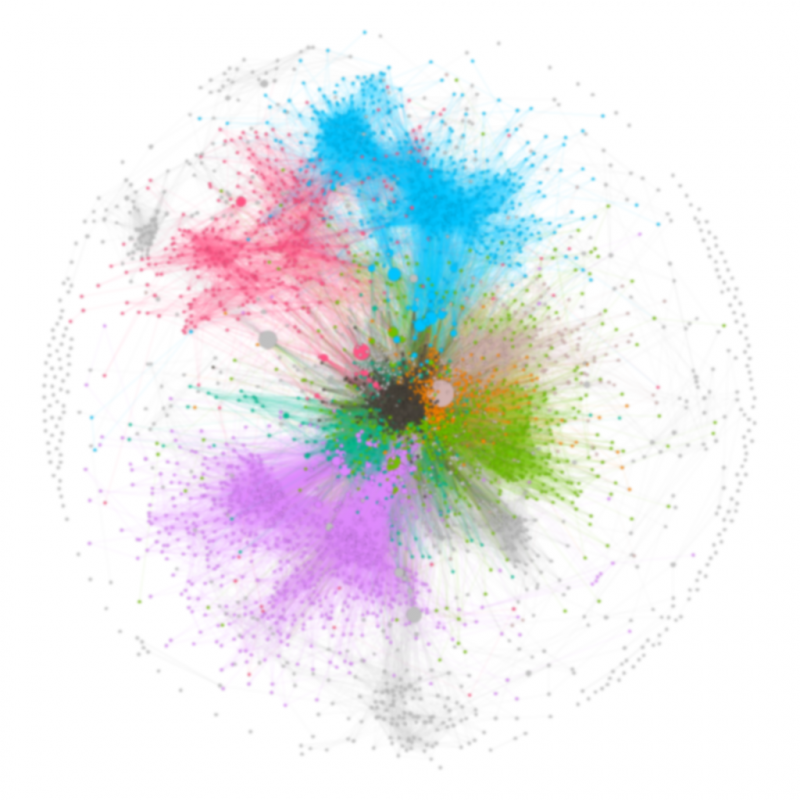
Management and business-related research (MBR) exhibits a disciplinary dissension path and a lack of cumulative knowledge development. This study aims to find and discuss evidence of MBR dissension and to identify intellectual/methodological bridges as potential pillars for cumulative knowledge development in Latin America and the Caribbean (LAC). A co-word network analysis of 22,000 + keywords sourced from 4600 + articles published between 1998 and 2017 by authors affiliated with LAC institutions showed a network's decreasing density and modularity in addition to a noticeable increase in the number of communities detected. The prominence and consistency of sustainability-related topics in LAC among the networks' principal components and key-terms with higher betweenness could be explained by global solution-oriented agreements such as the MDGs/SDGs. In contrast, MBR topics are not yet core issues on the SDG agenda. Methods from the sci-ences/disciplines heading toward consensus (e.g. mathematical models, computer simulation) showed a higher and consistent betweenness than MBR meth


Journal titles and mission statements: Lexical structure, diversity, and readability in business, management and accounting research

Abrir enlace

There is an established research agenda on dissecting an article's components and their association with a journal's prestige. However, journals' titles and their overview, aim and scope (i.e. journal's mission statement-JMS(s)) have not been investigated with the same diligence. This study aims to conduct a comprehensive outlook of titles and JMSs' lexical structure and identify significant differences between journals prestige and type of access and their JMS content in the field of business, management and accounting (BMA), considering the field's experience in developing and applying mission statements. Titles and JMSs' structural analysis reflected current and critical discussion in BMA: a predilection for counterintuitive findings and information and communication technology (ICT) tools. JMSs expressed primarily target customers and markets. JMSs from reputable journals showed a higher betweenness for key-terms related to rigorous features. In contrast, JMSs of lower reputable journals highlighted indexing attributes. The Wilcoxon rank-sum and the Kruskal-Wallis tests showed significant differences in the JMSs' median diversity regarding the journal's type of access and best quartiles.


Innovation for Sustainability in the Global South: Bibliometric findings from management & business and STEM (Science, Technology, Engineering and Mathematics) fields in developing countries

Abrir enlace

Research on innovation and sustainability is prolific but fragmented. This study integrates the research on innovation in management and business and STEM fields for sustainability in a unified framework for the case of developing countries (i.e., the Global South). It presents and discusses the output, impact, and structure of such research based on a sample of 14,000+ articles and conference proceedings extracted from the bibliographic database Scopus. The findings reveal research output inflections after global announcements such as UN-Earth Summits. The study also reveals the indisputable leadership of China in overall output and research agenda-setting. Nonetheless, countries such as India, Mexico, and Nigeria are either more efficient or impactful. GS research published in highly reputable journals is still scarce but increasing modestly. Central topic clusters (e.g., knowledge management) remain peripheral to the global Sustainable Development Goals (SDGs) research landscape. Finally, academic-corporate collaboration is in its infancy and limited to particular economic sectors: energy, pharmaceuticals, and high-tech.


Top, mid-tier, and predatory alike? The lexical structure of titles and abstracts of six business and management journals

Abrir enlace

There is an established agenda seeking to disentangle the relationship between journal articles’ title, keywords, or abstract attributes and their association with bibliometric performance. To date, however, there have been few comparative, benchmarking studies in MBR (management-business research), particularly between top-tier, mid-tier, and periodicals with predatory features. This study aims to provide such a benchmark by identifying significant differences/similitudes in the lexical structure of article titles and abstracts of six MBR journals: Academy of Management Journal and Strategic Management Journal, both distinguished journals in the discipline; Corporate Reputation Review and Journal of Global Information Management, two mid-tier journals; and WSEAS Transactions on Business and Economics and Problems and Perspectives in Management, both identified as journals with predatory features. Three content analysis methods were used: (i) semantic networks; (ii) text readability; (iii) and lexical diversity indices (i.e., Flesch-Kincaid grade level and Yule’s K). Kruskal–Wallis tests were also implemented to identify differences between groups. The findings showed no significant differences in article length, irrespective of groups. Significant differences were found, however, in the readability and lexical diversity of the abstracts, with those in the top-tier group having a lower median readability and higher median lexical diversity. Key-terms with higher betweenness were also found to be similar to those central to MBR in developing countries and top-tier journals on strategy.


Evaluaciones de los clientes

0.0


Valoración total de la Mente

5 estrellas

0

4 estrellas

0

3 estrellas

0

2 estrellas

0

1 estrellas

0

Dominio del tema

0.0

0.0

Discurso fluido y secuenciado

0.0

0.0

Capta la atención del público

0.0

0.0

Es inspirador e impactante

0.0

0.0

Conferencias, Cursos y/o Talleres


  • imagen portada Midiendo la ciencia - Introducción

    Midiendo la ciencia - Introducción

    De 1 Hora a 2 Horas

    En este espacio, abordaremos los aspectos introductorios sobre la cienciometría. Resolveremos la si...

  • imagen portada Midiendo la ciencia - Fuentes de datos

    Midiendo la ciencia - Fuentes de datos

    De 1 Hora a 2 Horas

    En este espacio, conoceremos las fuentes de datos bibliográficas para la investigación en cienciom...

Videos en acción


  • Bibliometric evidence on Innovation for Sustainability in the Global South
  • Investigación sobre innovación en China y América Latina
  • Investigación en Innovación China-América Latina
  • Converging or diverging? Structure transition of sustainability research
  • Mission statements of research-oriented organizations
  • Dissension or consensus? Management-Business Research in Latin America
  • La anaconda y el dragón - Colaboración institucional América Latina - China
  • Scientific elites in developing countries - Colombia
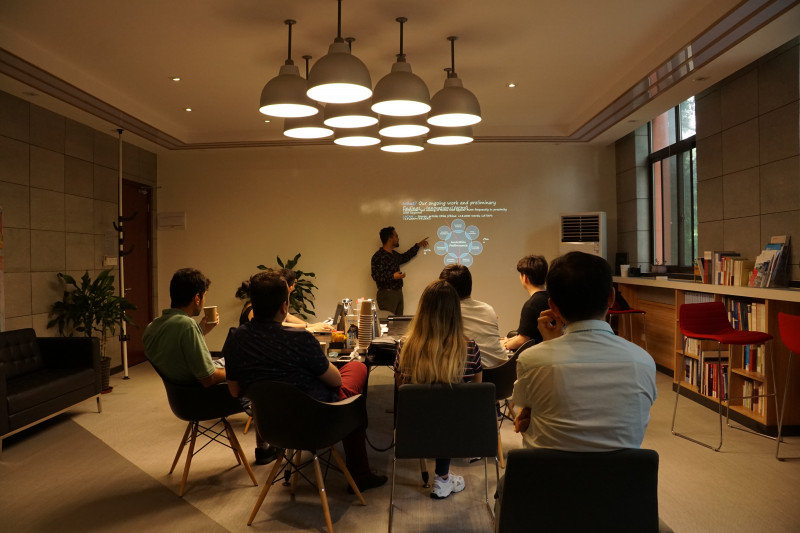
Fotos en acción


Libros publicados


  • libro

    Gobierno Electrónico en América Latina


    Esta investigación, tiene el objetivo de elaborar un marco teórico sobre el diseño, despliegue, evaluación, y futuro del GE (Gobierno Electrónico) en Latinoamérica. Para alcanzar este objetivo g ...
  • libro

    Capítulo - Patents for All: A Content Analysis of an Open-access Dataset of Colombian Patents 1930–2000


    The production of knowledge stock is essential for the long-term growth of a nation. One component of knowledge stock is patents. The publication of patents, nevertheless, is unevenly distributed arou ...

Experiencia Profesional


  • U

    Profesor de tiempo completo (distinguido)

    • Universidad del Rosario
    • 2014 - Actual
  • U

    Investigador asociado

    • Universidad de Fudan, China
    • 2019 - Actual
  • U

    Investigador visitante

    • Universidad de Fudan, China
    • 2019 - 2019
Ver más Experiencias Profesionales
  • U

    Profesor de tiempo completo (distinguido)

    • Universidad del Rosario
    • 2014 - Actual
  • U

    Investigador asociado

    • Universidad de Fudan, China
    • 2019 - Actual
  • U

    Investigador visitante

    • Universidad de Fudan, China
    • 2019 - 2019
  • U

    Asistente de docencia

    • Universidad de los Andes
    • 2012 - 2013
  • M

    Investigador junior

    • Ministerio de Ciencia, Tecnología, e Innovación, Colombia
    • 2011 - 2013

Estudios


  • U

    Maestría en estudios interdisciplinarios sobre desarrollo

    • Universidad de los Andes
    • 2015
  • U

    Administración de negocios internacionales

    • Universidad del Rosario
    • 2011
  • U

    Maestría en estudios interdisciplinarios sobre desarrollo

    • Universidad de los Andes
    • 2015
  • U

    Administración de negocios internacionales

    • Universidad del Rosario
    • 2011

Artículos


Mission statements of universities worldwide - Text mining and visualization

Abrir enlace
Purpose: To conduct a transnational study of universities' mission statements (MS) through content analysis by identifying characteristics related to language (e.g., number of words, the most and least frequently used words) and if those characteristics are related to universities' location, size, focus, research output, age band, and status. Design/methodology: Content analysis of 248 MS from universities worldwide using Voyant Tools. Findings: The main results show: (1) a necessity for self-awareness by the universities; (2) an overall emphasis on society and students, as stakeholders; (3) there were no discernible similarities in keywords used between firms and universities; (4) MS tend to be longer in universities from Asia and shorter from Europe; (5) the absence of quantitative elementsinto MS (e.g. number of new students enrolled); (6) small universities prioritized knowledge over research; (7) the youngest universities tend to use more of the least frequently used words; (8) collaboration was a barely mentioned term, although the pre-eminence of research and the dominance of groups in knowledge is now a global trend; (9) the youngest universities tend to use more of the least frequently used words; (10) public universities emphasized individuals (i.e., students) and private universities emphasized education as a whole; and (11) the private sector has a noticeable interest in the society which contrasts with the public sector's focus on community. Research limitations/implications: Subsamples of certain regions should be more inclusive in further studies. Considering that the mean sample of MS studies was 89.6, this study used a sample more than two times larger. Although, both African (4) and Latin American (5) subsamples were not significant compared with European (94) or North American (79) subsamples. Further studies should consider a more-inclusive sampling than the QS world university ranking. Practical implications: University planning offices can use these results and the digital database to construct a global outlook on MS trends or uncommonly used words to define the purpose of their university and future course of action, embrace an overall isomorphism, or seek a distinctive strategy to differentiate their MS from others. In addition, this research can be used by strategic planning scholars to conduct regionally or nationally focused studies. Social implications: Universities' MS serve as public pronouncements of their purpose, ambition, and values. In this study, we present and analyze the contents of those purposes, in which mission-oriented universities, some of them global influencers, seek to perform in multiple levels of importance for every country (i.e., education, research, and services with both private and public sectors, and the community).Originality/value: Most of the previous studies have been restricted to national contexts and based on reduced samples with no open access digital data. In this study, we consider a wide sample of universities from Europe, North America, Asia, and Oceania. We also considered both Latin America and Africa in a strictly exploratory fashion due to sample restriction and delivered a digital open access database of MS from those universities.


Innovation in Latin America through the lens of bibliometrics: crammed and fading away

Abrir enlace
Research in the field of innovation in business, management, and accounting (BMA) in Latin America (LATAM) has surpassed all expectations of its net output. Yet this digital tide suggests several concerns regarding its impact and both its established and emergent research topics at the individual, institutional, and country level. In this paper, an outlook of the field was developed based on a sample of + 1300 documents indexed in Scopus from 1983 to 2018. Public institutions in Brazil and Colombia have been both the most cited and productive in the region. Nevertheless, documents lead by non-LATAM authors showed significant differences in both paper citations and journals’ h-index compared to leading authors from LATAM. Three of the major concerns raised were, first, a growing inter-regional gap among LATAM countries. Second, the intensive use of a journal with predatory features over the last 5 years, therefore cites/document measure is at the lowest point of the past 17 years. And third, the delay of recently emergent topics in the region that have been in the literature for more than a decade, while frontier topics for BMA innovation such as those of Industry 4.0 remain unnoticed.


A bibliometric outlook of the most cited documents in business, management and accounting in Ibero-America

Abrir enlace
Research on business, management and accounting (BMA) in the past century has been overwhelming. Regardless of its significance, regions such as Ibero-America have been overlooked from exhaustive studies on bibliometrics in the subject of BMA. Here, a bibliometric outlook of the subject of BMA in Ibero-America using 19 variables was conducted by analyzing the ten most cited documents in BMA in each country from 1996 to 2017 using the citation database Scopus. The main findings showed a rapid increase in intellectual production led by Spain and Portugal, which also constitute most of the citations. The majority of the most cited studies are behind paywalls. Institutional status (i.e., private or public) has a significant effect on AACSB accreditation. A negative concern that arises for the whole region, mainly Latin-America, is the discriminated use of a journal with predatory features.


Ver más Artículos

Mission statements of universities worldwide - Text mining and visualization

Abrir enlace
Purpose: To conduct a transnational study of universities' mission statements (MS) through content analysis by identifying characteristics related to language (e.g., number of words, the most and least frequently used words) and if those characteristics are related to universities' location, size, focus, research output, age band, and status. Design/methodology: Content analysis of 248 MS from universities worldwide using Voyant Tools. Findings: The main results show: (1) a necessity for self-awareness by the universities; (2) an overall emphasis on society and students, as stakeholders; (3) there were no discernible similarities in keywords used between firms and universities; (4) MS tend to be longer in universities from Asia and shorter from Europe; (5) the absence of quantitative elementsinto MS (e.g. number of new students enrolled); (6) small universities prioritized knowledge over research; (7) the youngest universities tend to use more of the least frequently used words; (8) collaboration was a barely mentioned term, although the pre-eminence of research and the dominance of groups in knowledge is now a global trend; (9) the youngest universities tend to use more of the least frequently used words; (10) public universities emphasized individuals (i.e., students) and private universities emphasized education as a whole; and (11) the private sector has a noticeable interest in the society which contrasts with the public sector's focus on community. Research limitations/implications: Subsamples of certain regions should be more inclusive in further studies. Considering that the mean sample of MS studies was 89.6, this study used a sample more than two times larger. Although, both African (4) and Latin American (5) subsamples were not significant compared with European (94) or North American (79) subsamples. Further studies should consider a more-inclusive sampling than the QS world university ranking. Practical implications: University planning offices can use these results and the digital database to construct a global outlook on MS trends or uncommonly used words to define the purpose of their university and future course of action, embrace an overall isomorphism, or seek a distinctive strategy to differentiate their MS from others. In addition, this research can be used by strategic planning scholars to conduct regionally or nationally focused studies. Social implications: Universities' MS serve as public pronouncements of their purpose, ambition, and values. In this study, we present and analyze the contents of those purposes, in which mission-oriented universities, some of them global influencers, seek to perform in multiple levels of importance for every country (i.e., education, research, and services with both private and public sectors, and the community).Originality/value: Most of the previous studies have been restricted to national contexts and based on reduced samples with no open access digital data. In this study, we consider a wide sample of universities from Europe, North America, Asia, and Oceania. We also considered both Latin America and Africa in a strictly exploratory fashion due to sample restriction and delivered a digital open access database of MS from those universities.


Innovation in Latin America through the lens of bibliometrics: crammed and fading away

Abrir enlace
Research in the field of innovation in business, management, and accounting (BMA) in Latin America (LATAM) has surpassed all expectations of its net output. Yet this digital tide suggests several concerns regarding its impact and both its established and emergent research topics at the individual, institutional, and country level. In this paper, an outlook of the field was developed based on a sample of + 1300 documents indexed in Scopus from 1983 to 2018. Public institutions in Brazil and Colombia have been both the most cited and productive in the region. Nevertheless, documents lead by non-LATAM authors showed significant differences in both paper citations and journals’ h-index compared to leading authors from LATAM. Three of the major concerns raised were, first, a growing inter-regional gap among LATAM countries. Second, the intensive use of a journal with predatory features over the last 5 years, therefore cites/document measure is at the lowest point of the past 17 years. And third, the delay of recently emergent topics in the region that have been in the literature for more than a decade, while frontier topics for BMA innovation such as those of Industry 4.0 remain unnoticed.


A bibliometric outlook of the most cited documents in business, management and accounting in Ibero-America

Abrir enlace
Research on business, management and accounting (BMA) in the past century has been overwhelming. Regardless of its significance, regions such as Ibero-America have been overlooked from exhaustive studies on bibliometrics in the subject of BMA. Here, a bibliometric outlook of the subject of BMA in Ibero-America using 19 variables was conducted by analyzing the ten most cited documents in BMA in each country from 1996 to 2017 using the citation database Scopus. The main findings showed a rapid increase in intellectual production led by Spain and Portugal, which also constitute most of the citations. The majority of the most cited studies are behind paywalls. Institutional status (i.e., private or public) has a significant effect on AACSB accreditation. A negative concern that arises for the whole region, mainly Latin-America, is the discriminated use of a journal with predatory features.


Content Analysis in Business Digital Media Columns: Evidence From Colombia

Abrir enlace
The business world is a voracious consumer of business media content. Research on business columnists has been focused mainly on the effects of columns’ content on stock prices and stock exchange performance indicators. In this study, we delve into the characteristics of business media and their development in terms of the readability and content of business digital media columns from a developing country (Colombia). For this, we conducted a readability and content analysis of a sample of 565 columns from Dinero and Portafolio, two of the most influential business media outlets in Colombia. Our results showed an over-representation of male columnists, a lower readability compared with columnists from abroad, and non-significant differences in readability regarding the media outlet and the columnists’ academic degree or gender. We also found that both media outlets have similar patterns in terms of their narratives.


Identifying the dissension in management and business research in Latin America and the Caribbean via co-word analysis

Abrir enlace
Management and business-related research (MBR) exhibits a disciplinary dissension path and a lack of cumulative knowledge development. This study aims to find and discuss evidence of MBR dissension and to identify intellectual/methodological bridges as potential pillars for cumulative knowledge development in Latin America and the Caribbean (LAC). A co-word network analysis of 22,000 + keywords sourced from 4600 + articles published between 1998 and 2017 by authors affiliated with LAC institutions showed a network's decreasing density and modularity in addition to a noticeable increase in the number of communities detected. The prominence and consistency of sustainability-related topics in LAC among the networks' principal components and key-terms with higher betweenness could be explained by global solution-oriented agreements such as the MDGs/SDGs. In contrast, MBR topics are not yet core issues on the SDG agenda. Methods from the sci-ences/disciplines heading toward consensus (e.g. mathematical models, computer simulation) showed a higher and consistent betweenness than MBR meth


Journal titles and mission statements: Lexical structure, diversity, and readability in business, management and accounting research

Abrir enlace
There is an established research agenda on dissecting an article's components and their association with a journal's prestige. However, journals' titles and their overview, aim and scope (i.e. journal's mission statement-JMS(s)) have not been investigated with the same diligence. This study aims to conduct a comprehensive outlook of titles and JMSs' lexical structure and identify significant differences between journals prestige and type of access and their JMS content in the field of business, management and accounting (BMA), considering the field's experience in developing and applying mission statements. Titles and JMSs' structural analysis reflected current and critical discussion in BMA: a predilection for counterintuitive findings and information and communication technology (ICT) tools. JMSs expressed primarily target customers and markets. JMSs from reputable journals showed a higher betweenness for key-terms related to rigorous features. In contrast, JMSs of lower reputable journals highlighted indexing attributes. The Wilcoxon rank-sum and the Kruskal-Wallis tests showed significant differences in the JMSs' median diversity regarding the journal's type of access and best quartiles.


Innovation for Sustainability in the Global South: Bibliometric findings from management & business and STEM (Science, Technology, Engineering and Mathematics) fields in developing countries

Abrir enlace
Research on innovation and sustainability is prolific but fragmented. This study integrates the research on innovation in management and business and STEM fields for sustainability in a unified framework for the case of developing countries (i.e., the Global South). It presents and discusses the output, impact, and structure of such research based on a sample of 14,000+ articles and conference proceedings extracted from the bibliographic database Scopus. The findings reveal research output inflections after global announcements such as UN-Earth Summits. The study also reveals the indisputable leadership of China in overall output and research agenda-setting. Nonetheless, countries such as India, Mexico, and Nigeria are either more efficient or impactful. GS research published in highly reputable journals is still scarce but increasing modestly. Central topic clusters (e.g., knowledge management) remain peripheral to the global Sustainable Development Goals (SDGs) research landscape. Finally, academic-corporate collaboration is in its infancy and limited to particular economic sectors: energy, pharmaceuticals, and high-tech.


Top, mid-tier, and predatory alike? The lexical structure of titles and abstracts of six business and management journals

Abrir enlace
There is an established agenda seeking to disentangle the relationship between journal articles’ title, keywords, or abstract attributes and their association with bibliometric performance. To date, however, there have been few comparative, benchmarking studies in MBR (management-business research), particularly between top-tier, mid-tier, and periodicals with predatory features. This study aims to provide such a benchmark by identifying significant differences/similitudes in the lexical structure of article titles and abstracts of six MBR journals: Academy of Management Journal and Strategic Management Journal, both distinguished journals in the discipline; Corporate Reputation Review and Journal of Global Information Management, two mid-tier journals; and WSEAS Transactions on Business and Economics and Problems and Perspectives in Management, both identified as journals with predatory features. Three content analysis methods were used: (i) semantic networks; (ii) text readability; (iii) and lexical diversity indices (i.e., Flesch-Kincaid grade level and Yule’s K). Kruskal–Wallis tests were also implemented to identify differences between groups. The findings showed no significant differences in article length, irrespective of groups. Significant differences were found, however, in the readability and lexical diversity of the abstracts, with those in the top-tier group having a lower median readability and higher median lexical diversity. Key-terms with higher betweenness were also found to be similar to those central to MBR in developing countries and top-tier journals on strategy.


Evaluaciones


0.0

5 estrellas

0

4 estrellas

0

3 estrellas

0

2 estrellas

0

1 estrellas

0
Valoración total de la Mente